

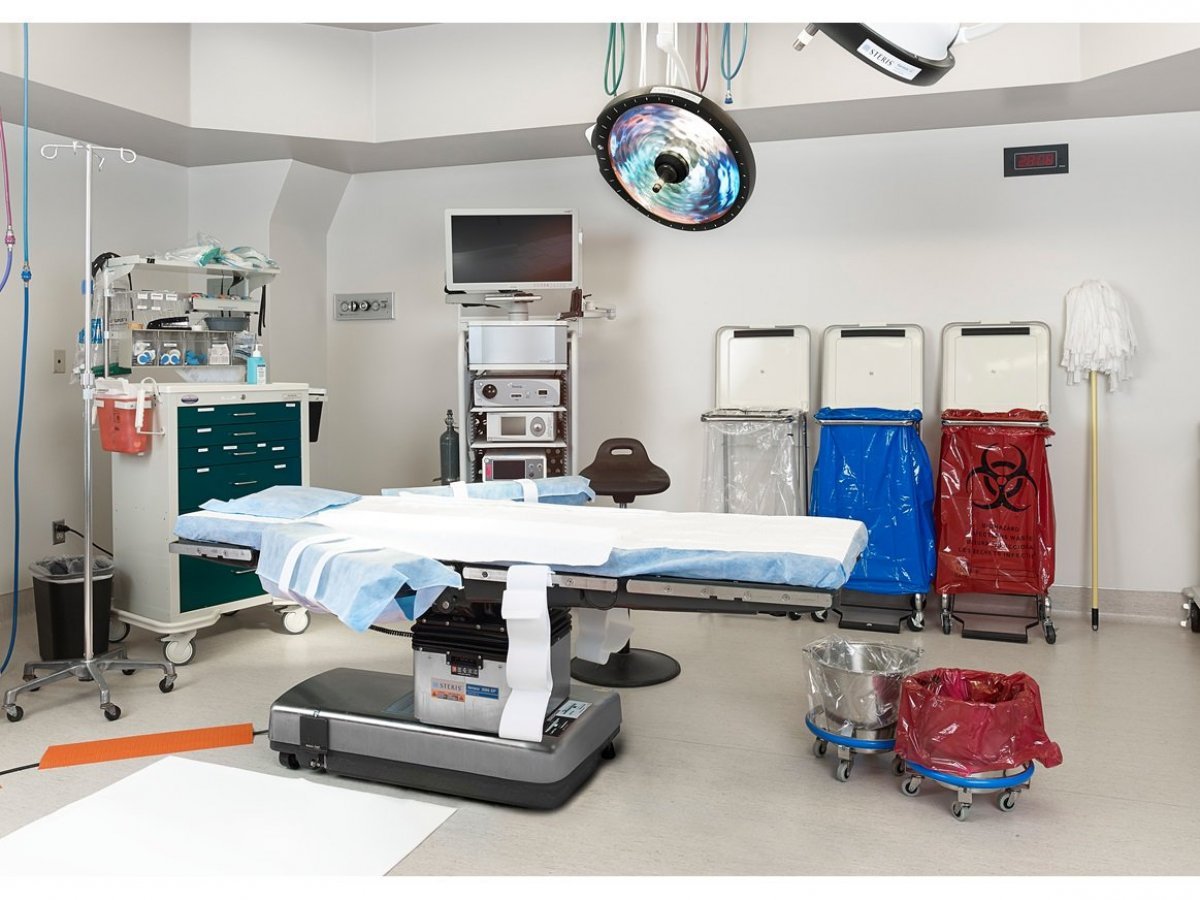
Operating room time is one of the most expensive resources in a hospital, and a lot of it goes to the gap between cases. Room turnover means removing everything from the last case, cleaning and disinfecting, and setting up for the next patient. It has to be done quickly and done right. An OR turnover kit puts the disposable items needed for that job into one package. This guide explains what a turnover kit typically contains, how it helps the turnover team, and what to look for when you choose one. It uses the Myflon operating room turnover kits sold by Bodyguard Advanced Materials LLC as a reference.
What room turnover involves
Turnover usually covers these steps:
- Patient out. The patient is moved to the stretcher and taken to recovery.
- Breakdown. Drapes, towels, table covers and other disposables are removed and discarded; instruments are sent for reprocessing; sharps and waste are handled.
- Cleaning and disinfection. Surfaces that were touched or soiled, especially the operating table, are cleaned and disinfected according to the facility's protocol.
- Set-up. The table is prepared with a fresh cover and positioning aids, and the room is stocked for the next case.
- Patient in. The next patient is brought in and transferred onto the table.
Every step involves several people and many small items. A turnover kit cuts down the number of separate items they have to gather.
What is inside a turnover kit
The contents vary by supplier and can usually be configured. According to the product page, Myflon turnover kits are built around four component types:
| Component | What it does (per product page) |
|---|---|
| Operating room table cover | Covers the table to give a clean surface for the procedure and prevent transfer of contaminants from the table to the patient |
| Patient transfer sheet | Allows safe, efficient transfer from the stretcher to the operating table, made from durable, fluid-resistant material |
| Arm covers | Shield the patient's arms during the case and are disposable |
| Hook-and-loop (Velcro) straps and fasteners | Secure the patient's limbs to keep them positioned and stop slippage; described as hypoallergenic and latex-free |
The operating table cover used in the Myflon Clean line is a super-absorbent cover. Its product page states that it can absorb up to 2.4 L of liquid.
How a turnover kit speeds turnover
One package instead of many. The team opens a single kit rather than collecting a table cover, transfer sheet, arm covers and straps from different storage locations.
Set-up starts sooner. Because the next table cover, transfer sheet and positioning items are already in the room, set-up can start as soon as cleaning is done.
Faster breakdown. Absorbent covers hold fluid, so less fluid is spread across the table and floor. The used cover, sheet and arm covers go straight into the waste stream with no linen to bag and launder.
Consistency across teams. Every room is set up with the same items in the same way. That makes the routine easier to learn and easier to audit, especially with float or agency staff.
Simpler stocking. Ordering, counting and restocking one item per case is easier than tracking several.
How turnover kits support infection control
Turnover is where contamination from one case can carry over to the next. Disposable components help in a few ways:
- each patient gets a new table cover, transfer sheet and arm covers;
- items that touched the previous patient are thrown away, not reused;
- an absorbent cover keeps fluid contained, which makes cleaning the table more manageable.
A kit does not replace cleaning and disinfection. The table, equipment and other surfaces still need to be cleaned according to your facility's environmental cleaning protocol and the manufacturer's instructions for each surface. The kit makes the work around that step faster and more consistent.
How to choose a turnover kit
1. Map your current process. Walk through a real turnover and list every disposable item the team uses, where it is stored and who gets it. That list is your draft kit.
2. Match the table cover to your tables. It should fit your operating tables and stay in place during transfer and positioning.
3. Check absorbency and backing. For cases with heavy fluid, an absorbent cover with a fluid-proof backing makes the biggest difference at breakdown.
4. Look at the transfer sheet. It should be strong enough for your patient population and resistant to fluid. Confirm how it is meant to be used with your transfer devices.
5. Review positioning items. Arm covers and straps should suit your armboards and positioning practice, and be gentle on skin.
6. Ask about configuration. Ask whether the contents can be adjusted for different case types or rooms, and whether kits can be combined with your standard procedure packs.
7. Trial and measure. Run the kit in one or two rooms and compare turnover times, missed items and staff feedback before rolling it out.
Measuring the impact
To know whether a kit is helping, measure before and after. Common measures are:
- Turnover time: from patient out to the next patient in, or from patient out to room ready, depending on how your facility defines it.
- Set-up delays: how often a case starts late because an item was missing.
- Restocking time and errors: how long it takes to stock rooms and how often items run out.
- Staff feedback: whether the turnover team finds the kit easier to work with.
Track the same measures over several weeks in trial rooms and comparison rooms. Results depend on your rooms, case mix and team, so your own data is the best guide.
Questions to ask a supplier
- What exactly is in the kit, and in what order is it packed?
- What size is the table cover, and how much fluid does it absorb?
- Are the components latex-free?
- Can the contents be adjusted?
- What are the case quantities, minimum order and lead time?
Related products
Turnover kits pair well with disposable surgical towels, Mayo and back table covers and general surgery drape packs, which cut down set-up items for the next case.
Request a quote or samples
Bodyguard Advanced Materials LLC supplies hospitals, surgery centers and distributors from Miami, FL. Email sales@bodyguardus.com, call +1 (201) 881-2055 or use the contact page to set up a trial of Myflon turnover kits in your operating rooms.
22 October 2026

