

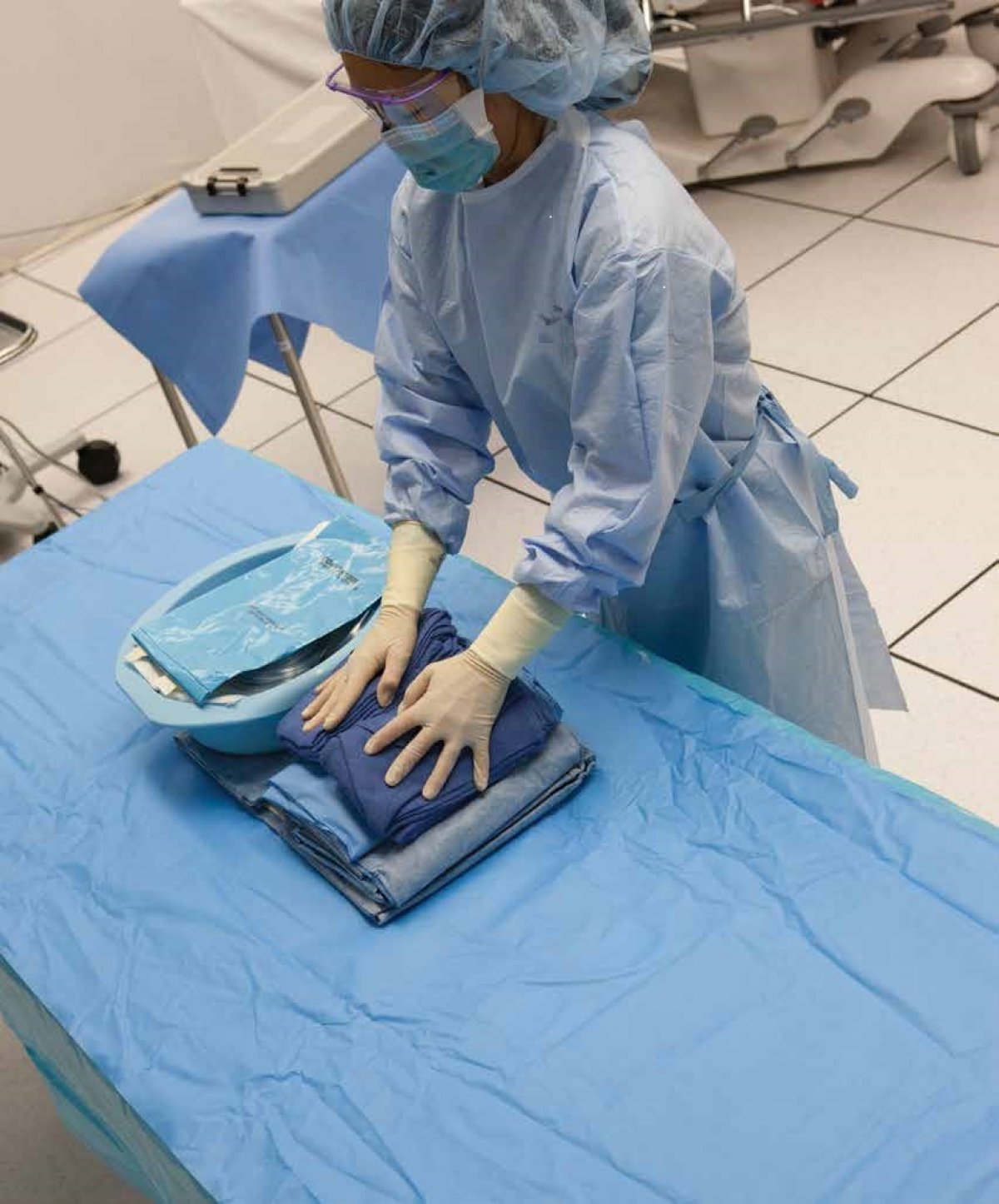
A flat sheet with a hole in it does not fit every patient or every procedure. Specialty surgical drapes are shaped around a specific body area, patient position and set of equipment. They put the opening where the surgeon needs it, manage fluid where it collects, and cover the parts of the patient and table that need to stay out of the field. This guide walks through the main specialty drape families, what each is for, and the drape styles listed for each in the Bodygard drape range.
A few terms first
- Fenestrated drape. A drape with an opening (fenestration) placed over the surgical site.
- Split drape. A drape with two tails that wrap around a limb or body part, used where a single opening does not fit the anatomy.
- Incise drape. A transparent adhesive film applied over the skin at the incision site.
- Pouch. A built-in bag that collects irrigation and body fluids, or holds instruments.
- Aperture. Another word for the opening, often adhesive-edged on small drapes.
The Bodygard disposable drape sheets page explains the basic types (surgical, non-fenestrated, fenestrated, incise and sterile field drapes) in more detail.
Orthopedic drapes
Orthopedic cases involve limbs that are moved during surgery, heavy irrigation and often traction or positioning devices. Orthopedic drapes are designed around that. Extremity and split drapes isolate an arm or leg. Hip drapes with pouches collect fluid. Arthroscopy drapes manage the large volume of fluid used in scope procedures. Shoulder drapes fit the beach chair or lateral position.
Styles listed on the orthopedics drapes page include HD extremity, HD arthroscopy, HD hip with pouches, HD split, HD hand and HD dual split shoulder drapes; arthroscopy drapes for dropped-leg procedures and with armboard covers; bilateral limb drapes; beach chair shoulder drapes; and a patient isolation drape and shoulder pouch.
Cardiovascular drapes
Cardiovascular procedures often need access to the chest and one or both legs (for vein harvesting) at the same time, so the drapes have to expose several sites while covering everything else. Peri-groin drapes give access to the femoral area. The cardiovascular drapes page lists cardiovascular split, peri-groin and incise drapes; head, side and foot drapes; and a CV universal drape pack.
Angiography drapes
Angiography and other catheter-based procedures need a long sterile field for wires and catheters, openings over the access site and coverage of a large imaging table. The access site determines the drape: femoral (groin) or radial/brachial (arm). The angiography drapes page lists femoral angiography drapes, angiography sheets, brachial angiography drapes, and radial/brachial and radial/femoral angiography drapes.
Neurosurgery drapes
Cranial procedures need a drape that seals around the head, often with the head fixed in a frame, and that collects irrigation fluid. Spine procedures need a long opening along the back. The neurosurgery packs page lists craniotomy drapes, craniotomy split drapes, neurological drapes and universal spine drapes.
Ophthalmology and EENT drapes
Eye, ear, nose and throat procedures use small, precise fields close to the airway, so drapes are typically small, lightweight and adhesive-edged, often with an incise film and a pouch for fluid. Split drapes and head or bar drapes keep the field clear of anesthesia equipment. The ophthalmology and EENT drapes page lists small, mid and large drapes with adhesive apertures; ophthalmic incise drapes; blepharoplasty drapes; aperture drapes; eye drapes with pouches; EENT split and large EENT split drapes; head/bar and bar drapes; and refractive drapes.
Obstetrics and gynecology drapes
Cesarean drapes are built for an abdominal incision with heavy fluid, usually with large collection pouches. Birth drapes and under-buttock drapes manage fluid during vaginal delivery. The obstetrics and gynecology drapes page lists cesarean birth drapes, gynecology birth drapes, abdominal covers, obstetrics birth drapes and under-buttock drapes.
Peri-gynecology drapes
Peri-gynecology procedures are performed with the patient in the lithotomy position and often combine a perineal field with an abdominal or laparoscopic field. Lithotomy drapes include leggings or leg covers. The peri-gynecology drapes page lists abdominal lithotomy drapes, laparoscopy and laparoscopy/pelviscopic drapes, lithotomy and lithotomy T drapes, LAVH drapes, and robotic drapes, including one with attached leggings.
Cystoscopy and urology drapes
Cystoscopy and other urology procedures are also done in lithotomy and use a lot of irrigation fluid, so fluid control is the main design concern. The cystoscopy drapes page lists cystoscopy T drapes, urological drapes and a lithotomy drape with a fluid control pouch.
Central line drapes
Central venous catheter insertion is done at the bedside as well as in procedure rooms, and full-barrier precautions call for a large sterile drape. Central line drapes give a large sterile field with an opening at the insertion site, such as the jugular or subclavian area. The central line drapes page lists central line drapes and sheets, a full-body central line drape, a jugular sheet and a line insertion drape.
Pacemaker drapes
Pacemaker and other device implants are usually done under fluoroscopy, so the drape has to cover the patient, the table and often the imaging equipment while leaving an opening over the upper chest. The pacemaker drapes page lists pacemaker drapes and sheets, a pacemaker angiography sheet and a fluoroscope procedure sheet.
Special procedure and ancillary drapes
Not every case needs a full specialty drape. The special procedure drapes range covers minor procedure drapes, small aperture drapes, epidural drapes and fistula drapes and sheets. The ancillary patient drapes range covers items that complete any set-up: Mayo and back table covers, utility and towel drapes, U drapes, leggings, stockinette, instrument and irrigation pouches, isolation bags, and C-arm, fluoroscope and instrument covers.
How to choose a specialty drape
- Match the position. Supine, lithotomy, lateral and beach chair positions each change where the drape has to reach.
- Check the opening. Its size, shape and position should match the incision or access site, and the adhesive should hold on prepped skin.
- Plan for fluid. Pouches and fluid-control designs matter most in orthopedics, urology, obstetrics and arthroscopy.
- Account for equipment. Imaging, robotics, scopes and armboards may need their own covers or a drape designed around them.
- Trial it. Have the surgical team use samples on real cases before switching.
Request samples or a quote
Specialty drapes can also be built into a standard procedure pack. Bodyguard Advanced Materials LLC supplies hospitals, surgery centers and distributors from Miami, FL. Email sales@bodyguardus.com, call +1 (201) 881-2055 or use the contact page to find the right drapes for your service lines.
22 October 2026

